



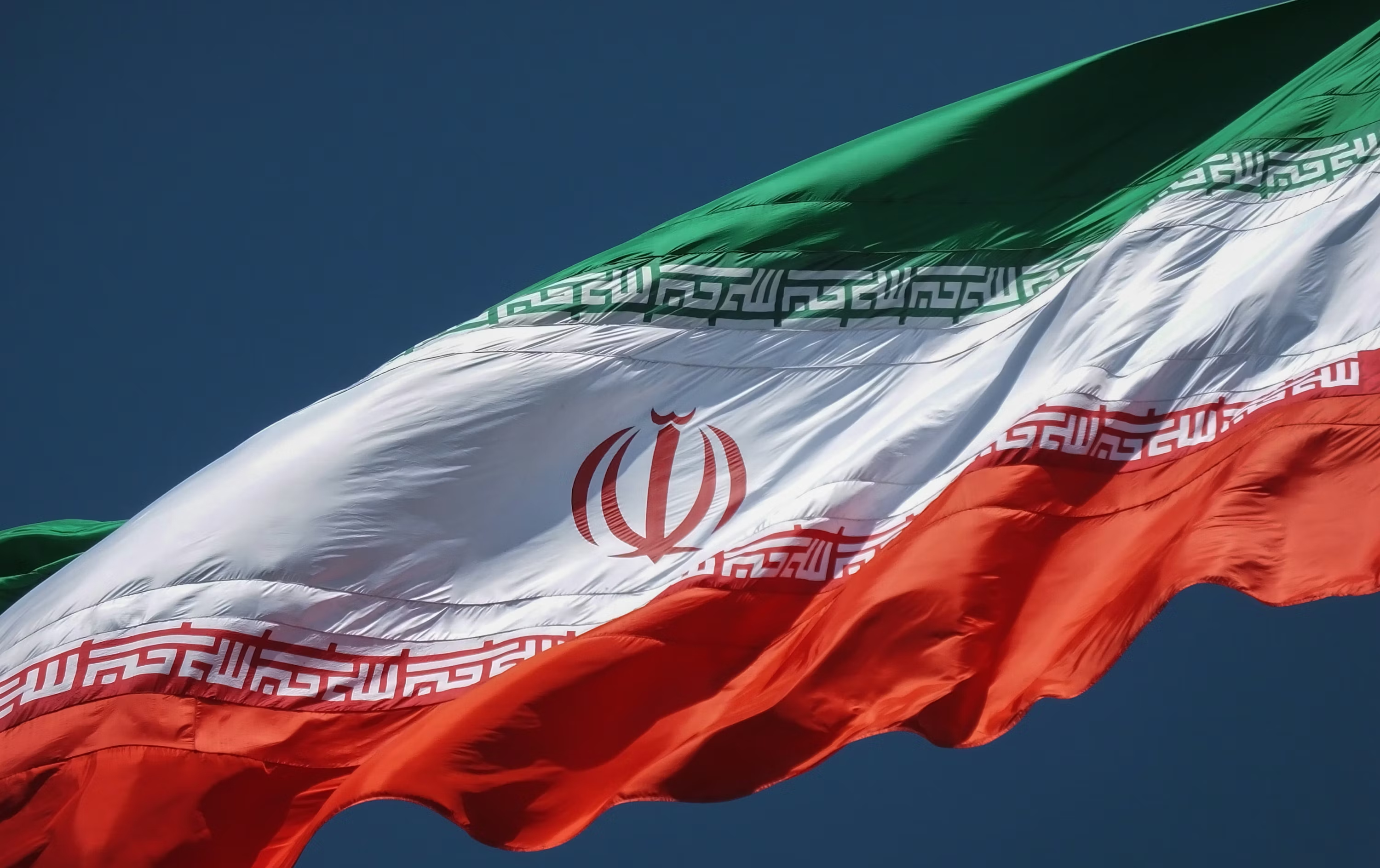
It should be obvious to the Philippines, South Korea and Japan that their reliance on the US for regional protection against China has just been rendered meaningless after seeing how the US hasn’t been able to protect its Gulf state allies against incoming missiles from Iran.
President Ferdinand Marcos Jr’s shift from the previous administration’s neutrality between China and the US to one heavily pro-American is looking more like a miscalculation. Marcos Jr has invited the US access to increased military bases and undergone joint military US-Philippines military exercises. This military alignment has caused tremendous strain on China-Philippines relations.
The obvious question: How could the US provide defensive security to the Philippines in a would-be conflict with a much more powerful and formidable China when the US is failing to stop a lesser military power in Iran in its attacks on US allies in the Middle East? The obvious answer: the US can’t, and any serious military analyst in the Philippines now know this.
Look to South Korea where a real threat exists with their neighbor to the North. The US is so short on missile defense systems in their Middle East war that to the dismay of South Korean leaders, the US had to take some of those defense systems to be used in the Middle East.
It showed the US shortage of military defensive hardware as well as who the US prioritizes in allies to protect – Israel first, and everyone else falls behind it. In the Asian-Pacific region, the Philippines as a priority to protect in the case of a regional war, it would most likely be behind Japan, South Korea, and Australia.
On energy needs
In addition to the obvious military vulnerability exposed in this war on Iran, the Philippines, South Korea and Japan are also finding out that their energy needs are better met in the US’ foes like China, Russia and Iran (the latter controlling the Strait of Hormuz). The Philippines, which depends on 90% of its energy from oil going through the Strait, it was in dire need when the Strait was closed to them, even having to declare a national state of energy emergency.
What did the Philippines do? First, the US could not help them. Instead, they resorted to buying oil from China and other Asian countries. Through diplomacy and undisclosed deals, eventually the Philippines were given safe passage, the green light, from Iran to go through the Strait of Hormuz.
With limited US resources in military hardware and in providing energy (US is too far away) to the Philippines, Marcos Jr. should be thinking about repairing the Philippines’ relationship with China, who was gracious enough to sell them oil in times of their greatest need. Where was the US? Not there for them.
At least when it comes to foreign relations, the Duterte administration was keener, smarter and wiser in foreign policy than Marcos Jr to recognize the importance of neutrality between the two superpowers.
Multipolar world, ever more apparent in this war with Iran
And this revelation – that the US cannot protect their allies around the world which has served as an extension of US strength and Empire — is not just for Asia to notice. Europe is already aware of the US’s limitations and the reality of a multipolar (multiple strengths with no real one dominance) world that it essentially is sitting out from this US-Israel conflict with Iran.
And in the case of some European nations like Spain, they have been emboldened to outright criticize the US in this war of aggression in the Middle East.
Europe has never been so bold to reject the US in their military adventurism. Certainly, part of Europe’s refusal has to do with President Trump’s antagonism towards Europe in tariffs and demands to pony up more money for NATO. But there is also the matter of Trump’s desire to take over Greenland which Europe rejects and Trump’s half-hearted support for Ukraine. But ultimately, Europe is seeing what the world is seeing, a world of multipolarity.
It will be interesting to see how the petrodollar (global oil purchases be done in dollars) replacement among certain countries with their local currencies or Yuan will further weaken US Empire. Iran is already implementing oil imports through the Strait of Hormuz have a requirement that transactions be traded in Yuan over the dollar.
President Trump realizes what the world notices in the US’s slip in geopolitical influence which he thinks he can solve by throwing even more money into the military to bolster US global Empire. He wants to push for a record $1.5 trillion (up from just under $1 trillion) for the US military.
But that will do little to bolster confidence among US allies. When inexpensive drones can be cost-effective and fairly successful against multi-million dollars missiles, any leader with intelligence will choose cooperation over war with his neighbors any day – this would be one path.
The other more dangerous path this war could bring about is massive militarization among nations that relied on US for defense but no longer can. Perhaps the rich gulf states will pursue this route of massive weapons building. They can afford to do it.
Trump has exposed the US Empire’s vulnerability to the world – that it cannot be the global policeman even if it wanted to. Many geopolitical analysts already see the writing on the wall that the unilateral superpower that the US was, is no longer.
We can accept this reality and choose to be better neighbors, be more cooperative, and invest in our own domestic needs. Or we can waste more money with the delusion of global Empire, continue to fight costly wars and face the possibility of nuclear annihilation.
About Author


+ There are no comments
Add yours